

When people think about AV event production, their minds often jump straight to dazzling LED walls, immersive lighting, and dramatic stage designs. Yet time and again, it’s audio—not visuals—that determines whether an event truly succeeds or quietly fails. In the AV event production industry, sound isn’t just a technical component; it’s the backbone of communication, engagement, and emotional impact.
Audio Is the First Thing Audiences Notice—and the Last They Forgive
A flawless visual can’t save an event where the audience can’t clearly hear the presenter. Crackling microphones, uneven volume levels, feedback, or delayed audio immediately pull attendees out of the experience. In contrast, great audio often goes unnoticed—and that’s the goal. When sound is clear, balanced, and immersive, audiences stay focused on the message rather than the mechanics.
In live events, audio errors are especially unforgiving because there’s no rewind button. This places immense responsibility on audio engineers and production teams to anticipate issues and solve them before they’re audible.
The Complexity Behind “Just Sound”
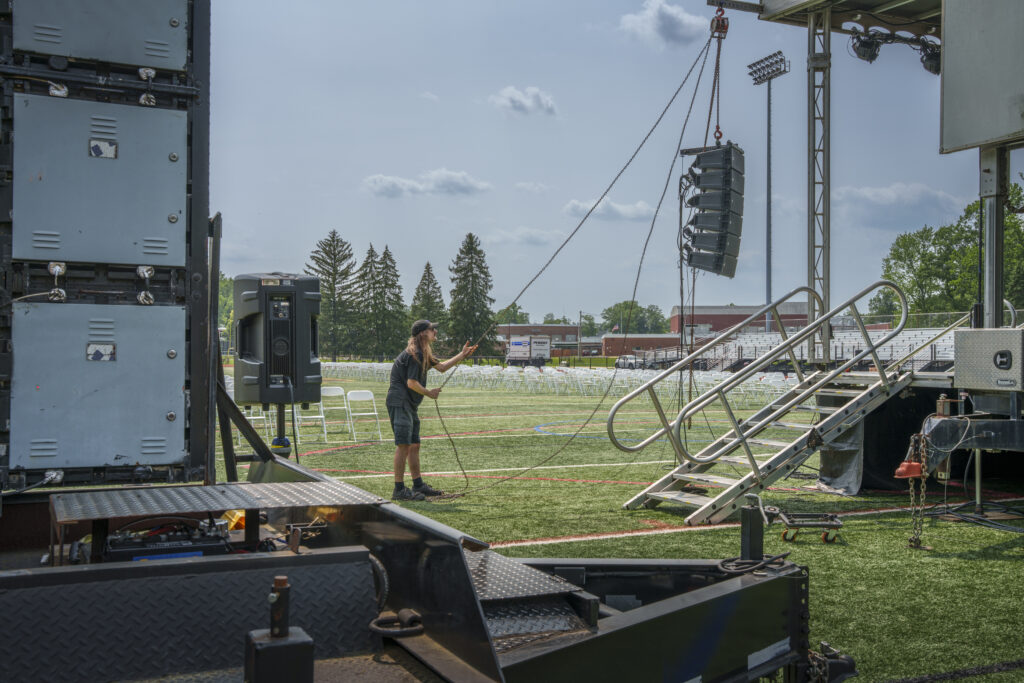
To the audience, audio may seem straightforward: microphones, speakers, done. Behind the scenes, however, audio production is one of the most complex elements of live events.
Audio teams must account for:
- Room acoustics and reverberation
- Audience size and layout
- Microphone selection and placement
- Wireless frequency coordination
- Gain structure and signal flow
- Redundancy and backup systems
- Integration with video, lighting, and show control
Every venue presents unique challenges. A ballroom behaves differently from a convention hall, outdoor festival, or theater. Audio professionals must adapt quickly, often with limited setup time, to ensure consistent coverage and intelligibility throughout the space.
How to Improve Sound at Live Events
Achieving great audio doesn’t happen by accident. It’s the result of preparation, expertise, and attention to detail. Here are a few key ways AV production teams can significantly improve sound quality at live events:
Prioritize Pre-Production Planning
Great audio starts long before load-in. Reviewing event run-of-show details, understanding presenter needs, and evaluating venue acoustics allow audio teams to plan microphone types, speaker placement, and system tuning in advance. Site visits or virtual walk-throughs can reveal potential issues like reflective surfaces, low ceilings, or ambient noise sources.
Choose the Right Microphones for the Job
Not all microphones are created equal. Handhelds may work best for panels, while lavaliers or headset mics are better for presenters who move. Selecting the correct microphone—and placing it properly—dramatically improves clarity and reduces feedback and background noise.
Optimize Speaker Placement and Coverage
More volume doesn’t equal better sound. Proper speaker placement ensures even coverage throughout the room without hot spots or dead zones. Using front fills, delays, or distributed systems helps maintain consistent intelligibility, especially in large or unusually shaped venues.
Control the Room, Not Just the Mix
Managing audio isn’t only about what comes out of the speakers. Reducing stage noise, managing audience microphones, and controlling playback levels all contribute to a cleaner mix. When possible, acoustic treatments or drape can also help tame excessive reverberation in challenging spaces.
Rehearse and Sound Check Thoroughly
A full sound check with presenters and performers is one of the most effective ways to prevent issues. This allows engineers to set gain levels, fine-tune EQ, and identify problem frequencies before the audience arrives. Rehearsals also help presenters become comfortable with their microphones, improving overall delivery.
Build in Redundancy
Backup microphones, spare batteries, and redundant signal paths can save an event when something fails—which it inevitably will at some point. Planning for failure is a hallmark of experienced audio professionals.
Conclusion

In the AV event production industry, audio is the invisible force that holds everything together. It delivers the message, drives emotion, and shapes the overall experience. While visuals may grab attention, audio earns trust. And in live events, trust is everything.
Whether it’s a corporate keynote, a product launch, or a live performance, great audio isn’t optional—it’s essential.